Loading Bay Safety: A Practical Guide
A comprehensive guide to identifying loading bay risks and selecting appropriate control measures
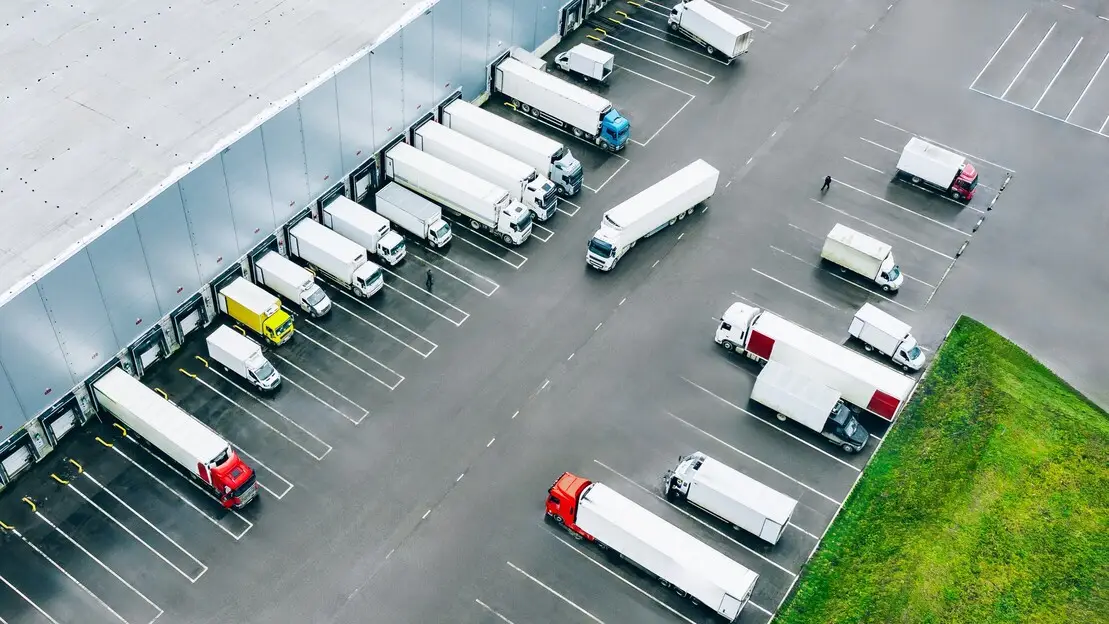
Loading bays are among the highest-risk areas on industrial, manufacturing and logistics sites. Heavy goods vehicles (HGVs), forklifts, moving loads and pedestrians often operate in the same space, frequently under time pressure and in changing environmental conditions.
Common loading bay incidents can involve trailer drive-aways, falls from loading bay edges, vehicle and pedestrian collisions, and unsafe operating sequences during loading and unloading. While no single control measure can address every risk, a combination of engineered safety controls, traffic management procedures and operator training can help reduce the likelihood of incidents.
This guide explains the main loading bay hazards, the regulations and guidance commonly considered in the UK, and the safety systems that can help create a safer loading operation.
What Is Loading Bay Safety?
Loading bay safety refers to the systems, procedures and control measures used to help manage risks during loading and unloading activities.
- Trailer restraint systems
- Trapped-key interlocking systems
- Loading bay levellers
- Loading bay doors and safety gates
- Traffic management systems
- Pedestrian segregation measures
- Signalling and access control systems
When properly selected, maintained and operated, these measures can help reduce the risks associated with vehicle movement, falls from height and human error during loading operations.
Loading Bay Hazards and Legal Considerations
Understanding the risks present at a loading bay is the first step towards identifying suitable control measures.
Trailer Drive-Away Incidents
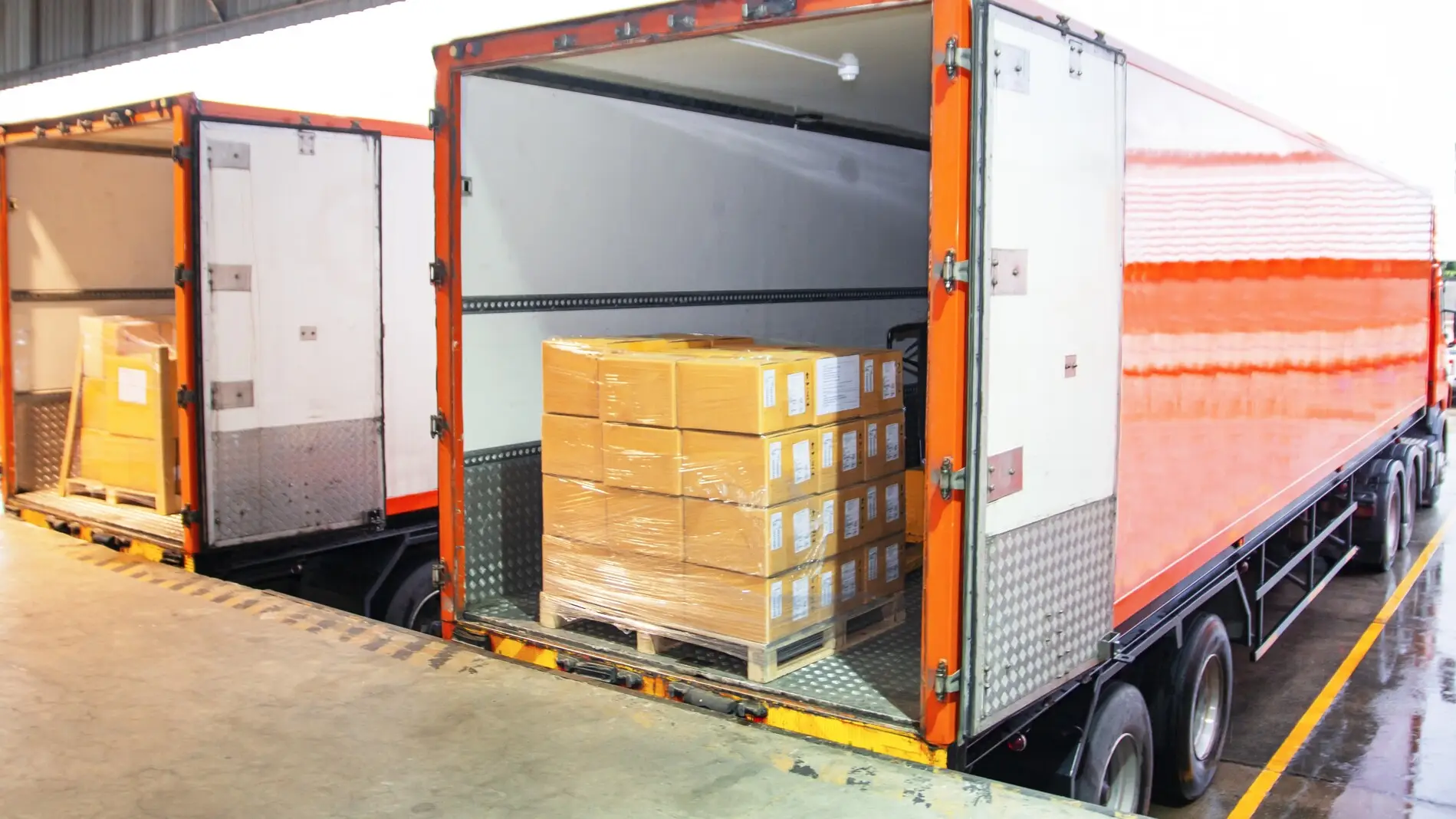
A drive-away incident can occur when a driver moves a vehicle before loading or unloading activities are complete.
- A forklift is still inside the trailer
- Personnel are working at the rear of the vehicle
- Loading equipment remains connected to the trailer
Because of the potential for serious injury, managing trailer movement is often a key focus of loading bay safety systems.
Falls from Loading Bay Edges
Where there is no vehicle present, or where a trailer moves unexpectedly, workers may be exposed to a fall from the loading bay edge.
- Poor visibility
- Wet or slippery surfaces
- Inadequate edge protection
- Trailer creep or movement during loading
Vehicle and Pedestrian Collisions
Loading bays often accommodate a mixture of HGVs, vans, forklift trucks, site personnel, contractors and visitors. Without clearly defined routes and appropriate traffic controls, the risk of collisions can increase significantly.
Unsafe Operating Sequences
Some incidents arise not from equipment failure but from operating equipment in the wrong order.
- Opening a loading bay door before a trailer has been secured
- Deploying a loading bay leveller before conditions have been verified as safe
- Releasing a vehicle before loading activities have finished
Engineered controls can help reduce the opportunity for these types of sequencing errors.
Which Regulations Apply to Loading Bay Safety?
There is no single loading bay regulation in the UK. Instead, loading bay safety is typically considered through several pieces of legislation and guidance, including:
- Provision and Use of Work Equipment Regulations (PUWER)
- Workplace (Health, Safety and Welfare) Regulations
While legal duties vary depending on the operation and location, the common principle is that employers should assess foreseeable risks and implement appropriate control measures.
IMPORTANT - This article provides general information only and should not be considered legal advice. Organisations should seek guidance from competent health and safety professionals when assessing site-specific requirements.
What Should a Loading Bay Risk Assessment Include?
A loading bay risk assessment should consider all activities that take place during loading and unloading operations.
Vehicle Movement
- Reversing operations
- Vehicle manoeuvring space
- Trailer stability
- Drive-away prevention measures
Pedestrian Safety
- Walkways and crossing points
- Access restrictions
- Visibility between pedestrians and vehicles
Falls from Height
- Loading bay edge protection
- Trailer movement
- Safe use of loading bay levellers
Equipment Operation
- Loading bay doors
- Loading bay levellers
- Vehicle restraints
- Interlocking systems
Environmental Conditions
- Lighting levels
- Adverse weather
- Surface conditions
- Visibility
Training and Procedures
- Driver instructions
- Operator competence
- Emergency procedures
- Permit and access controls
A site-specific risk assessment is generally the most reliable way to determine which combination of control measures may be appropriate.
Types of Loading Bay Safety Systems
Most well-designed loading bays use multiple layers of protection rather than relying on a single safety control.
Trailer and Vehicle Restraint Systems
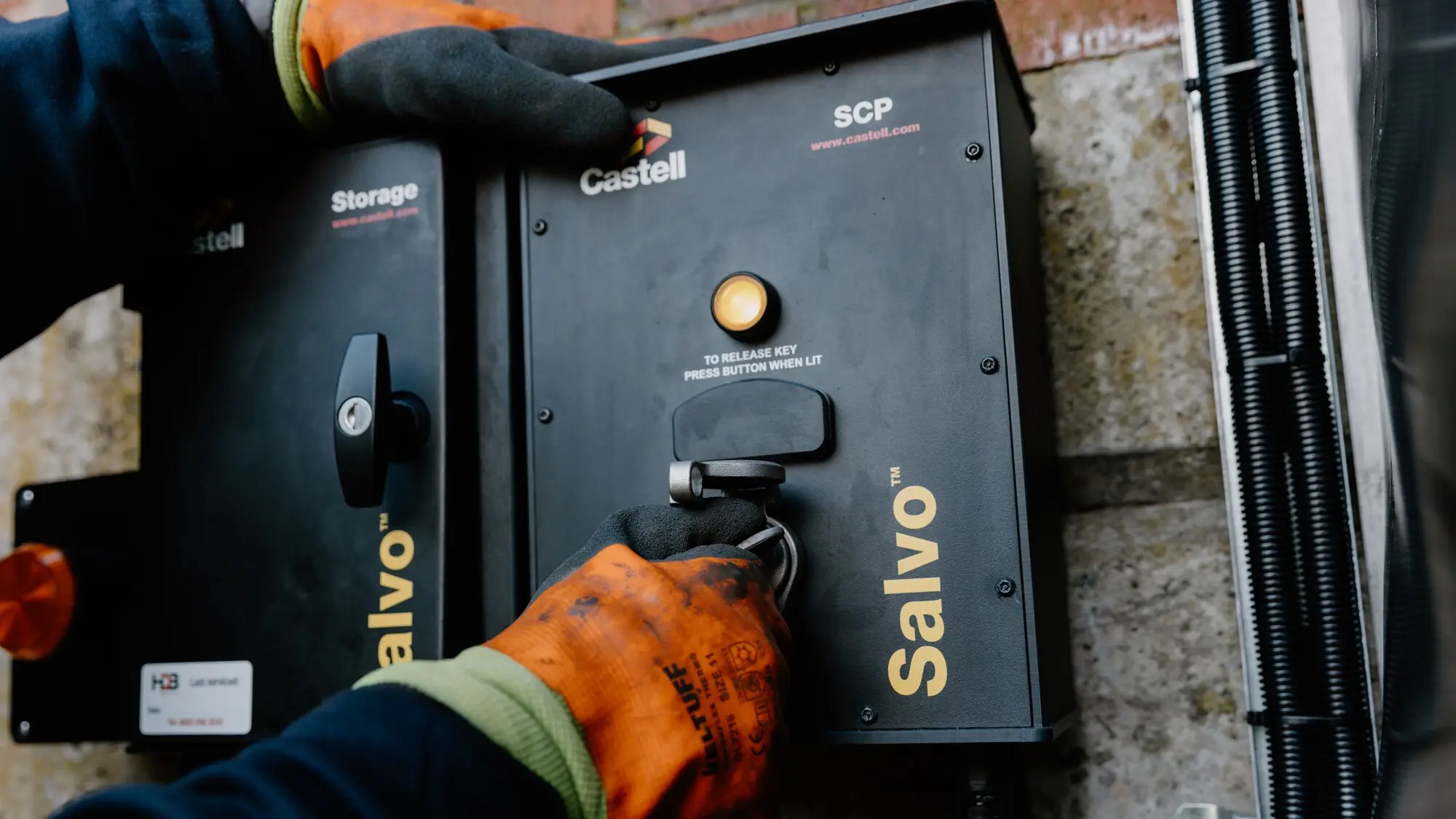
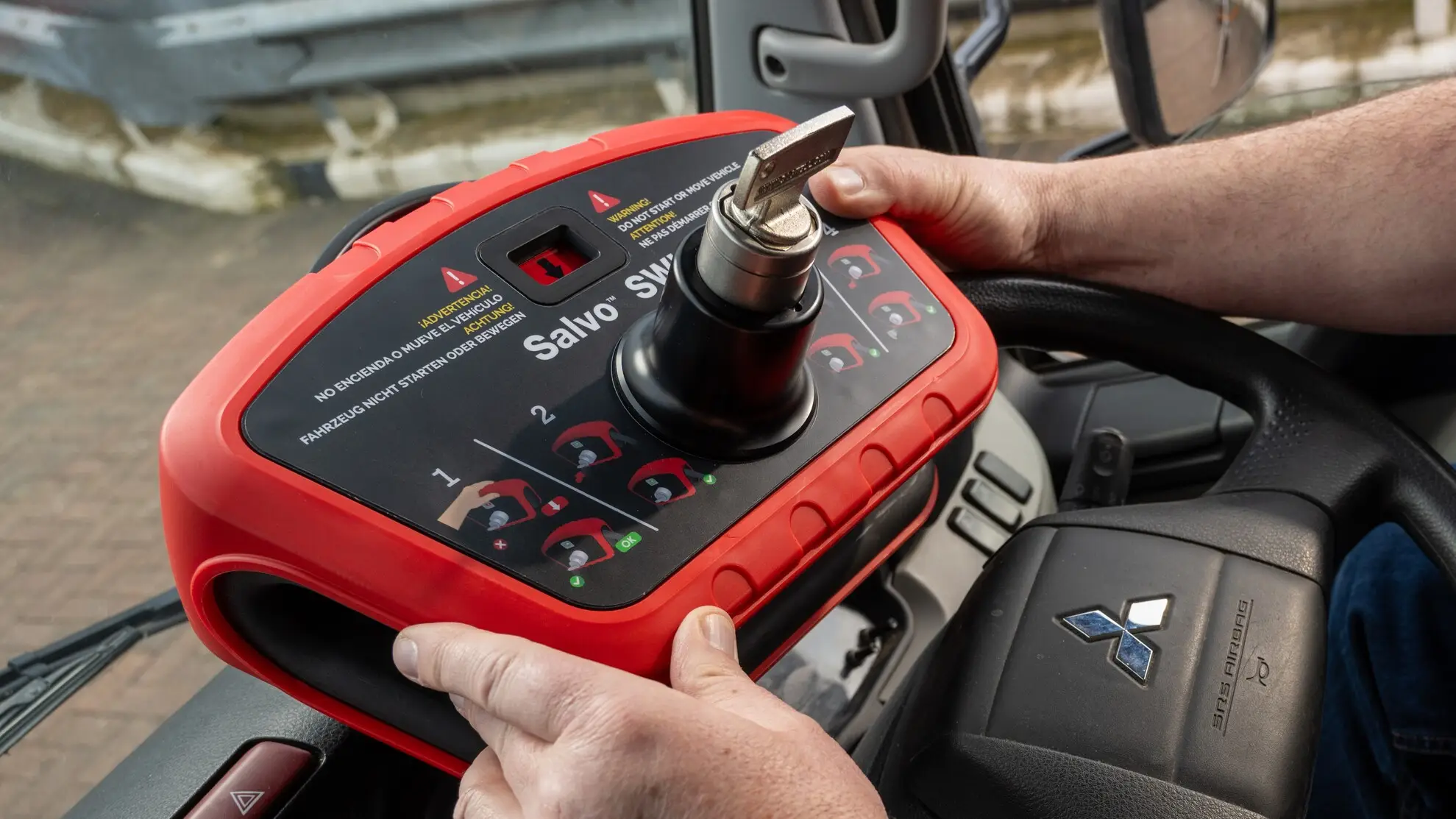
Trailer restraint systems are designed to help prevent unintended vehicle movement during loading and unloading. Depending on the application, restraint systems may secure gladhand connections, air brake lines, steering wheels or vehicle wheels.
These systems are often used as a primary engineering control for managing drive-away risks. Sentric Safety Group’s Salvo Loading Bay Safety System is designed to help secure vehicles during loading operations through controlled key-exchange sequences and vehicle restraint technology, such as a steering wheel lock.
Loading Bay Interlocks and Trapped Key Systems
A loading bay interlock uses trapped key interlocking to enforce a predetermined sequence of operations. For example, a system may be configured so that:
- A vehicle restraint must be engaged.
- The loading bay door can then be opened.
- The loading bay leveller can subsequently be operated.
- The restraint can only be released once loading activities are complete and equipment has been returned to its required position.
By controlling operator actions through a defined sequence, trapped-key interlocking systems can help reduce the likelihood of unsafe operating conditions arising from human error.
Traffic Management and Pedestrian Protection
Effective traffic management can help reduce interactions between vehicles and pedestrians.
- Marked pedestrian routes
- Physical barriers
- One-way traffic systems
- Vehicle signalling systems
- Designated loading and waiting areas
Integrating signalling systems with loading bay safety equipment can provide additional visibility regarding the operational status of a loading bay.
Access Control and Operational Control
Access control systems can help limit the operation of critical equipment to authorised personnel. When combined with vehicle restraints and interlocking systems, access control can support the implementation of a defined loading procedure, helping operators follow the intended sequence of operations.
Trailer Restraints vs Trapped-Key Interlocking: What’s the Difference?
Although they are often used together, trailer restraints and trapped-key interlocking systems perform different functions.
| Trailer Restraints | Trapped-Key Interlocking |
| Help manage vehicle movement | Help manage operational sequences |
| Address drive-away risks | Address procedural errors |
| Physically secure vehicle elements | Control the order of operations |
| Focus on vehicle safety | Focus on process safety |
Many loading bays utilise both approaches as part of a wider safety strategy.
How Trapped-Key Interlocking Supports Loading Bay Safety
Trapped-key interlocking systems work by controlling the movement of unique keys between locks positioned at different stages of a process. A key is only released when a piece of equipment has reached its designated condition. The released key then enables the next operation in the sequence.
In a loading bay application, a typical sequence may involve:
- Securing the vehicle.
- Releasing a key to open the loading bay door.
- Enabling loading bay leveller operation.
- Completing loading activities.
- Returning equipment to its designated position.
- Releasing the vehicle once the process has been completed.
This approach is designed to help ensure that operators follow the intended sequence of operations while reducing reliance solely on procedures, signs or training.
Choosing the Right Loading Bay Safety Solution for You
The most suitable solution will depend on factors such as throughput, vehicle type, layout and operational risk.
Distribution and Logistics Centres
High-volume operations may prioritise solutions that support rapid vehicle turnaround while maintaining safe loading procedures.
Chemical and Hazardous Materials Facilities
Sites handling higher-risk materials may require more comprehensive interlocking and access-control arrangements.
Food and Cold Storage Operations
Safety equipment may need to withstand frequent washdowns, low temperatures and rapid-action loading bay doors.
Multi-Bay Facilities
Where multiple loading bays operate simultaneously, site-wide traffic management and pedestrian segregation can become particularly important.
A professional site survey can help identify the controls most appropriate for a specific loading environment.
Why Choose Sentric Safety Group?
The Sentric Safety Group brings together specialist safety brands including Salvo, Castell, Kirk and STi. This combination allows organisations to access expertise across multiple areas of industrial safety, including:
- Vehicle restraint systems
- Trapped-key interlocking
- Access control
- Safety signalling and protection systems
By considering these elements together, organisations can take a more integrated approach to loading bay safety.
Since 2005, our dedicated loading bay safety solutions brand, Salvo, has been a trusted name in the industry. Salvo products protect against accidental drive-aways while giving manufacturing, retail and warehouse operations the insight they need to run more efficiently.
Looking to Improve Your Loading Bay Safety?
Every loading bay presents different challenges. Our specialists can review your current loading process, discuss potential risks such as drive-away incidents, loading bay edge falls and unsafe operating sequences, and recommend loading bay safety solutions suited to your application.
Frequently Asked Questions
What is a loading bay interlock?
A loading bay interlock is a system designed to enforce a predefined sequence of operations between equipment such as trailer restraints, loading bay doors and loading bay levellers. It helps ensure that equipment is operated in the intended order.
How do trailer restraint systems work?
Trailer restraint systems are designed to help prevent unintended vehicle movement during loading and unloading. Depending on the solution, they may secure a vehicle’s gladhand connection, air brake line, steering wheel or another component.
Can loading bay safety systems be retrofitted?
In many cases, loading bay safety equipment can be added to existing facilities. The suitability of retrofit solutions depends on factors such as vehicle types, loading bay layout and existing infrastructure.
How often should loading bay safety equipment be inspected?
Inspection requirements will vary depending on the equipment, manufacturer recommendations and site procedures. Organisations should follow documented inspection, maintenance and testing programmes appropriate to their operation.
What causes loading bay accidents?
Common causes include unintended trailer movement, vehicle and pedestrian interactions, falls from loading bay edges, inadequate traffic management and failures to follow safe operating procedures.
How do you make a loading bay compliant?
Compliance depends on the specific risks present on a site. Common considerations include risk assessment, traffic management, suitable loading equipment, maintenance, operator training and appropriate engineering controls.
What is the difference between a loading bay and a loading dock?
The terms describe the same area – where vehicles load and unload goods – and are largely regional: “loading bay” is the more common term in the UK and Europe, while “loading dock” is standard in the US. The hazards and safety systems described in this guide apply equally to both.

LOADING BAY SPECIALISTS
Specify the right solution for your application.
Our engineers can help you identify suitable loading bay safety solutions based on your vehicle types, operational requirements and existing loading bay setup.