
What is a Trapped Key Interlock?
A trapped key interlock enforces sequences and prevents incorrect operation. Trapped key interlocks are used globally to reduce risk when performing tasks in harsh and safety-critical work environments.
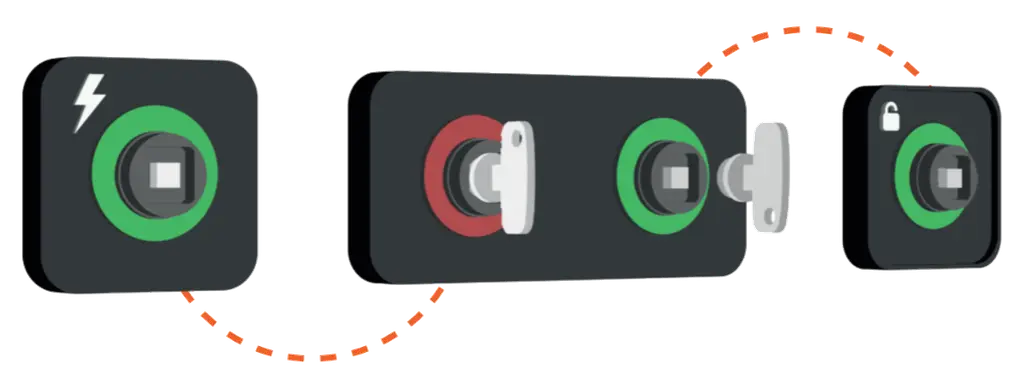
Trapped Key Interlocking
Trapped key interlocking is a mechanical safety system that uses a coded sequence of keys and locks to enforce a predetermined order of operations. This ensures that hazards are controlled and conditions are met before equipment can be operated or accessed. Trapped key interlocking is trusted to mechanically enforce processes and procedures, reducing risk to personnel and equipment across critical energy infrastructure and industrial applications.
Why Use a Trapped Key Interlock System?
To protect personnel from hazards by enforcing predetermined sequences of operations.

To prevent downtime and equipment damage due to operational errors.

To provide risk control, giving everyone the right to be safe at work.

Installing a trapped key interlock system ensures that a predetermined sequence of events is followed. While Lockout/Tagout (LOTO) provides a visual warning, relies on following procedures and can be bypassed, a trapped key interlocking system prevents procedures from being bypassed and physically enforces the correct order of operation.
How Does a Trapped Key Interlock System Work?
A trapped key interlocking system consists of three defined actions: isolating hazardous energy, transferring or exchanging sequenced keys, and accessing the protected area or equipment. Each interlock system is designed specifically with these actions in mind to ensure the solution operates effectively from start to finish.
Isolation & Energy Control Interlocks
Trapped key interlocks are used to isolate or control sources of hazardous energy. Once the equipment is correctly de-energised, the key is turned to physically prevent the equipment from being turned back on. The key is now free to be taken to the next step in the process.
Key Exchange and Transfer Interlocks
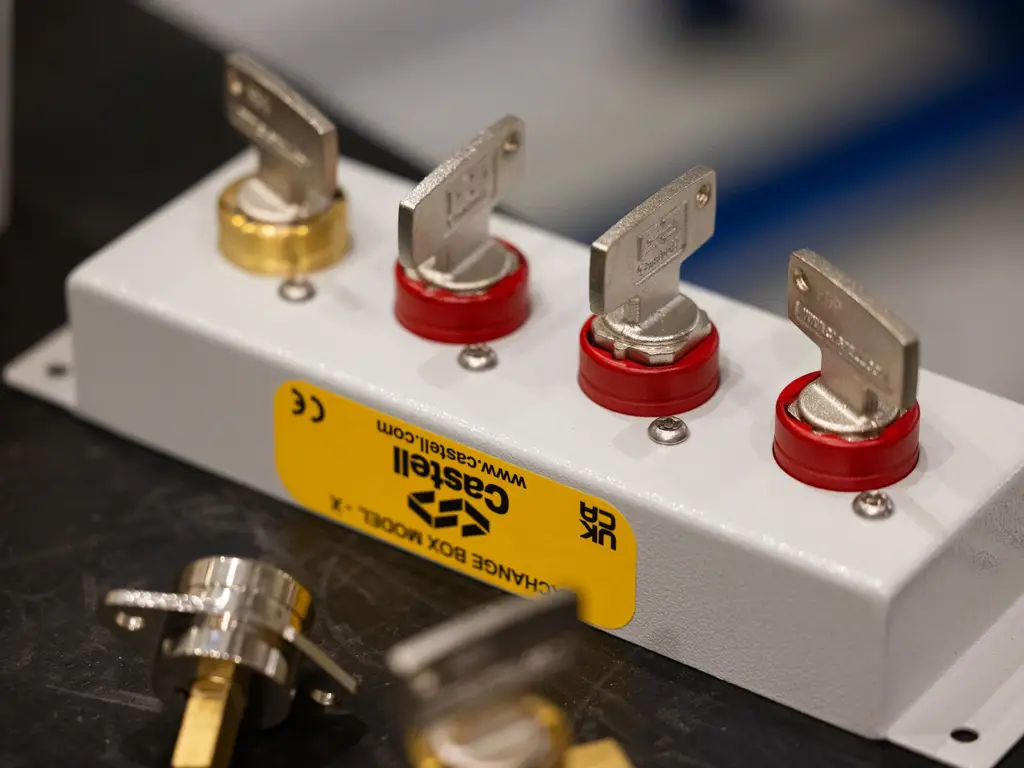
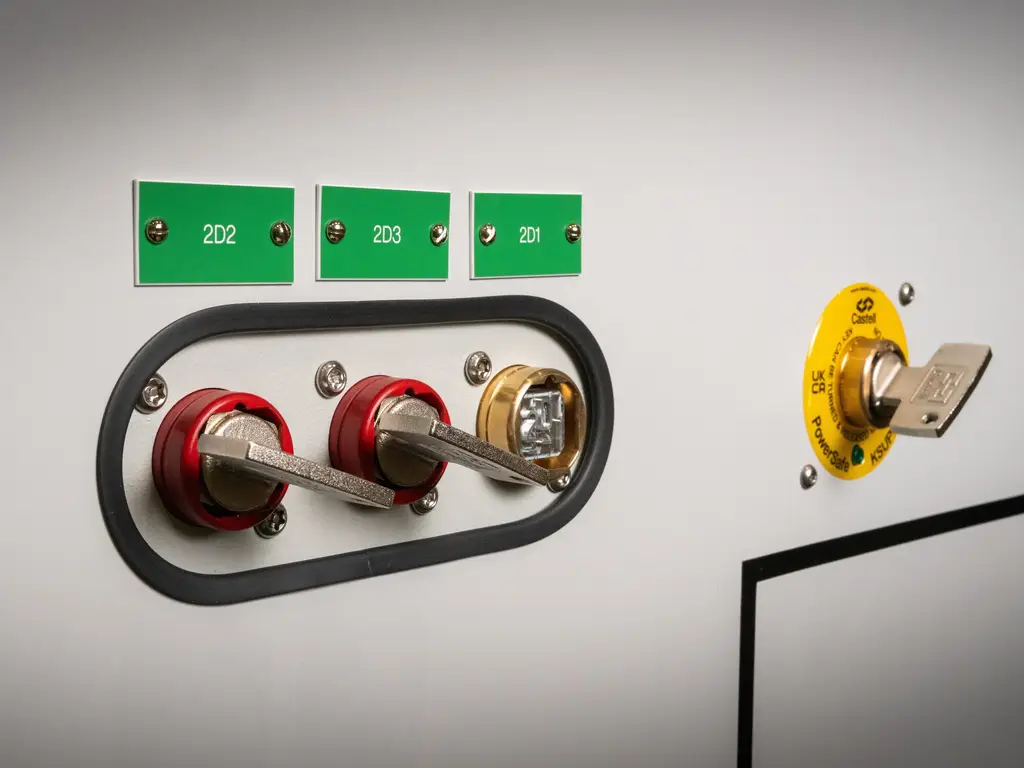
Now that power has been isolated, the free key can be taken to an exchange box where the access keys are trapped, awaiting the introduction of the free key from the isolation interlock. Once the free key has been inserted and turned in the exchange box, the access key(s) are now released, and the free key is trapped.
Access Interlocks and Personnel Keys
The access key(s) can now be taken to the access points and inserted into the access interlock(s). Personnel can safely enter the area with peace of mind that the power has been fully isolated and cannot be re-energised until the trapped key solution is reversed.
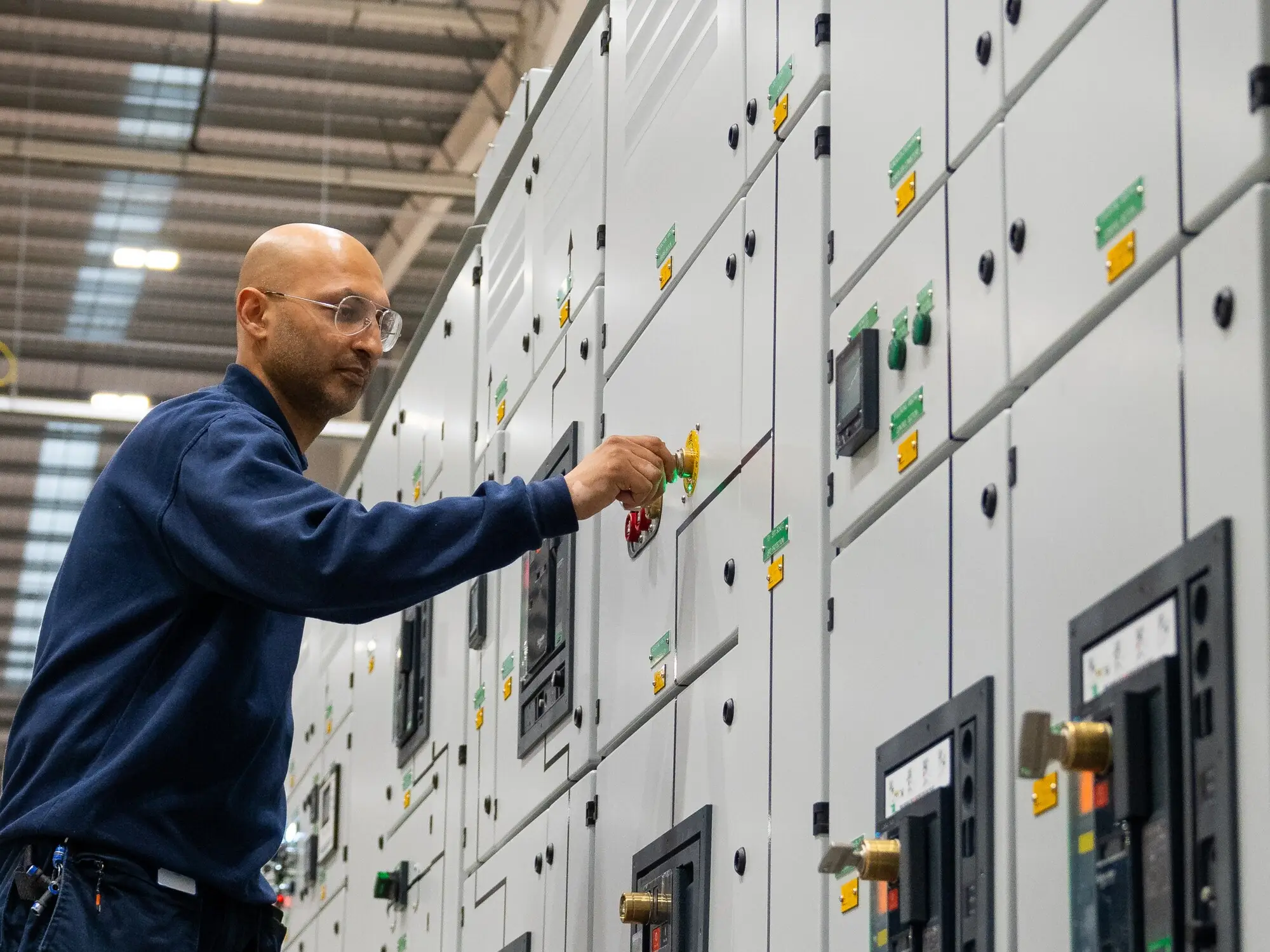
The Core Functions of Trapped Key Interlocking
Energy Isolation Control
The primary function of any trapped key safety interlock is to confirm that hazardous energy – electrical, pneumatic, hydraulic, or mechanical – has been fully isolated before access is permitted. The key is only released from the isolation point once the energy source is locked in a safe state. This makes re-energisation physically impossible while personnel are inside the protected zone.
Sequence Enforcement
Trapped key interlocking mechanically enforces the correct operating sequence every time. It cannot be bypassed and doesn’t rely on training or operator memory.
Access Control to Hazardous Areas
Once isolation and key transfer are complete, the access interlock governs entry to the areas containing hazards. For multi-person access, personnel key systems allow each individual to hold their own key – the machine cannot restart or the power cannot be restored until every key is returned.

Where Are Trapped Key Interlocks Used?
Trapped key interlocking systems are deployed wherever a fixed, repeatable safe sequence is needed to protect people from hazardous energy or moving machinery. The industries below represent the most common and critical applications.
Food and Beverage Manufacturing
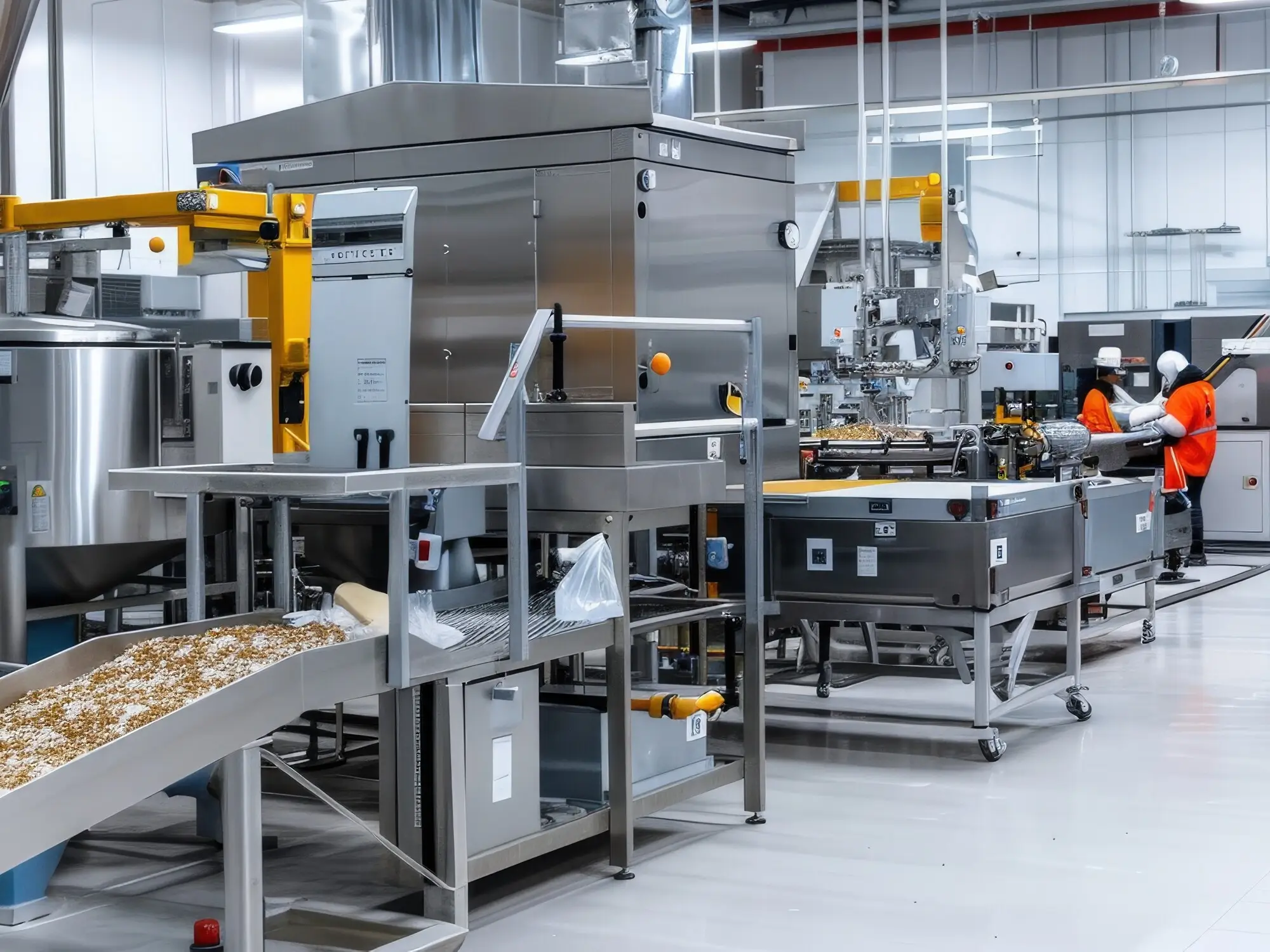
Mixers, conveyors, fillers, and packaging lines all present serious entanglement and crush risks during cleaning and maintenance. A trapped key interlock system helps ensure that the area cannot be accessed until power is confirmed off. In an industry where cleaning cycles are frequent and time pressure is constant, mechanical enforcement of the isolation sequence removes the risk of a rushed worker bypassing the procedure. Learn more about safety solutions for the food and beverage industry from Sentric Safety Group.
Energy and Utilities
High-voltage switchgear, transformers, and substations demand absolute certainty that the correct isolation sequence has been followed. Kirk interlocks and Castell interlocks have been the standard in switchgear and energy applications for over a century. Discover our range of energy safety solutions today.
Rail and Depot Safety
Rail depots present a unique combination of hazards: live overhead lines, moving rolling stock, and ground-level personnel working in close proximity. Zonegreen’s depot protection systems use trapped key interlocking to enforce safe zones – ensuring that traction power is isolated and physically confirmed before maintenance staff enter areas of hazard. The key interlock system prevents any train movement into a protected area until all personnel keys are accounted for and returned.
Loading Bays and Logistics
The interface between a reversing vehicle and a loading bay is one of the most consistently dangerous points in any logistics operation. Salvo’s trapped key interlock solutions physically link the dock leveller, the bay door, and the vehicle restraint system in a controlled sequence. The vehicle cannot depart while the bay door is open, and the door cannot open until the vehicle is secured. It is a simple, mechanical solution to a hazard that causes serious injuries every year. Our leading loading bay safety solutions are available to explore now.
Data Centres
In data centres, continuous power is essential for operation. To maintain uptime, facilities rely on complex electrical infrastructure including redundant power supplies, emergency generators, UPS systems, transformers, and medium-voltage switchgear. However, while these systems increase resilience, they also introduce complexity and require carefully controlled switching, isolation, and maintenance procedures – all of which can be enforced using trapped key interlocking. Learn more about our renowned data centre safety solutions.

Interested in learning more? Discuss your application with a trapped key interlock specialist today.
Trapped Key Interlocking vs LOTO: Key Differences
Lock Out – Tag Out (LOTO) is a procedure. It relies on a trained worker applying a padlock and a warning tag to an isolation point, then verifying that energy is absent.
A trapped key interlock system is a physical enforcement mechanism and is not reliant on operator training. The machine cannot be re-energised while the key is at the access point. The access point cannot be opened until the key arrives from the isolation interlock.
LOTO and trapped key interlocking are not mutually exclusive, and are often used in parallel. A trapped key safety interlock provides another layer of assurance and procedure enforcement that a padlock and tag simply cannot match.
Trapped Key Interlock Solutions from Sentric Safety Group
Sentric Safety Group brings together five specialist brands, each with deep expertise in trapped key interlock applications across the world. Based in Ohio, USA, Kirk has over 100 years of trapped key engineering behind it, with a catalogue spanning mechanical and electromechanical interlocks for switchgear, valves, and industrial machinery. Headquartered in London, UK, Castell delivers precision-engineered interlocks for energy, switchgear, and process industries. Based in Paris, France, STi provides safety interlocks for industrial machinery and guard access. Salvo specialises in loading bay and logistics safety, linking vehicle restraints, bay doors, and dock levellers in a single controlled sequence. Zonegreen, headquartered in Sheffield, UK, protects rail depot personnel with proven depot protection systems built on trapped key principles.
If you’re interested in learning more about our solutions, we encourage you to explore our full range of trapped key interlock systems or contact our teams to discuss your application.
Frequently Asked Questions
How do trapped key interlocks work?
A trapped key interlock uses a physical key that can only be removed from a lock when the associated equipment is in a predetermined safe state – typically de-energised or secured. That key is then used to release the next interlock in the sequence. Because the key is always trapped in either the isolation point or the access point, the correct sequence cannot be bypassed and the equipment cannot be re-energised while personnel are inside the protected area.
What are the advantages of a trapped key interlock system over LOTO?
LOTO depends on trained workers following a procedure correctly every time. A trapped key interlock system makes the correct sequence the only possible sequence, non-compliance is mechanically prevented. For high-risk operations such as switchgear access or rail depot entry, this hardware-enforced approach eliminates the human error risk that procedural systems carry. The two approaches can also be used together for maximum protection.
Where are trapped key interlock systems used?
Trapped key interlocking systems are used across a wide range of industries wherever a fixed, safe sequence must be followed to protect people from hazardous energy or moving machinery. Common sectors include energy and utilities, food and beverage manufacturing, rail and depot operations, loading bays and logistics, data centres, chemical processing, and heavy industrial manufacturing. Any application with a repeatable isolation and access requirement is a strong candidate for a key interlock system.
Which equipment is compatible with trapped key interlocks?
For energy applications, trapped key interlocks are widely used on a variety of electrical and switchgear equipment from all major manufacturers. For industrial applications, we offer a variety of isolation and access locks that allow our systems to be compatible regardless of your facility and machinery
What is the difference between a trapped key interlock and a captive key interlock?
There is no functional difference. A captive key interlock and a trapped key interlock are the same device – “captive key” is simply an alternative term used in certain industries and regions to describe the same mechanical principle. Both terms refer to a system where the key is physically retained within the lock until a safe condition is confirmed.
I have a complex application and requirements where standard products may not be entirely suitable. Can a custom trapped key interlock system be designed?
Yes, custom trapped key interlock systems can often be provided, depending on your supplier. At Sentric Safety Group, we offer a Custom Solution Design service to work with you to develop a system that fits your site’s specific needs. We’d be happy to discuss your requirements.
Does Sentric Safety Group offer a ‘Ronis’ or ‘Profalux’ key?
Yes, we offer these keys; they are branded ‘Flat’ for ‘Ronis’ and ‘Star’ for ‘Profalux’. The Star key is superior to the Flat due to safer coding, learnability and durability. Ronis and Profalux are now generic industry terms for a specific key shape in trapped key interlock systems.

TRAPPED KEY INTERLOCK SPECIALISTS
Specify the right interlock for your application.
Our engineers help you specify the right trapped key interlock system – from simple mechanical isolation to fully integrated electromechanical sequences.