
What Is an Access Interlock? A Plain-English Guide
An access interlock is a key-operated lock fitted to a door, gate or guard that leads into a hazardous area. It will only open once the energy source has been switched off and locked, and while the door is open it holds on to the key that could switch it back on. The result is simple: restarting a machine or restoring power while someone is inside is prevented. This guide explains how access interlocks work, how the main types differ and how to choose one for your site.
What an access interlock does (and does not) do
An access interlock enforces a safe order of events at the point of entry. The key it needs is obtained by isolating the hazard first, typically from an isolation interlock on a switch, breaker or valve. Once that key is turned in the access interlock, the door can be opened, and the key stays trapped until the door is closed and locked again.
In practice, an access interlock does three things:
- It prevents entry until the hazard has been isolated.
- It prevents re-energisation for as long as the door is open.
- It minimises reliance on memory, procedure or training at the moment of entry.
It is just as important to be clear about what it does not do:
- It is not a security lock. Access interlocks control safe entry to machinery and hazardous areas, not general building security.
- It does not isolate energy on its own. It relies on an isolation device elsewhere in the sequence to release its key.
- It does not wait for run-down by itself. Where machinery keeps moving after power is removed, a time delay unit such as the Castell DAE mechanical time delay unit is added to the sequence.
- It does not replace a risk assessment. The right interlock and sequence depend on the hazard, the access point and how often people go in.
To learn more about the wider principle of coded keys and locks, see our guide to trapped key interlocking.
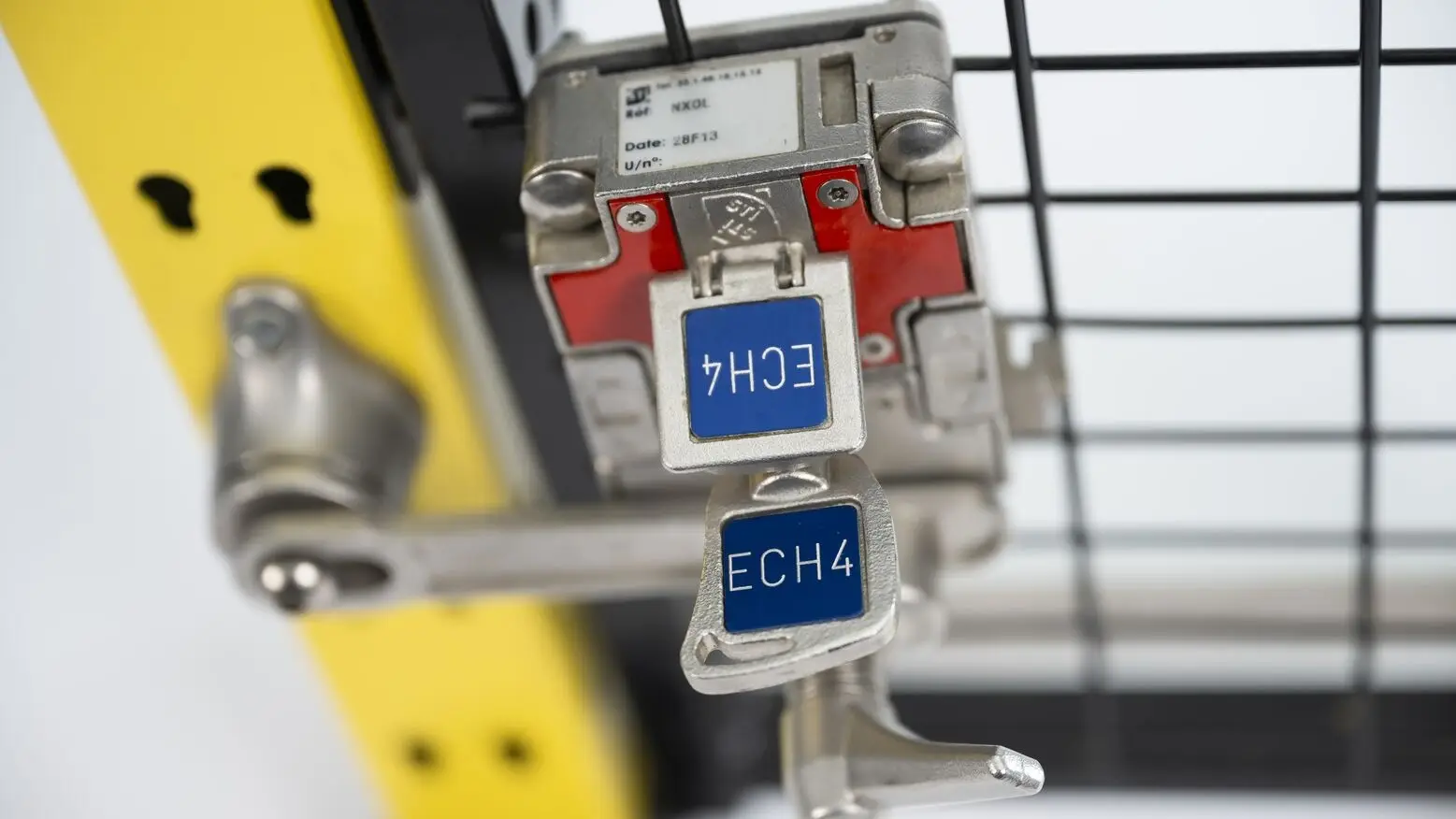
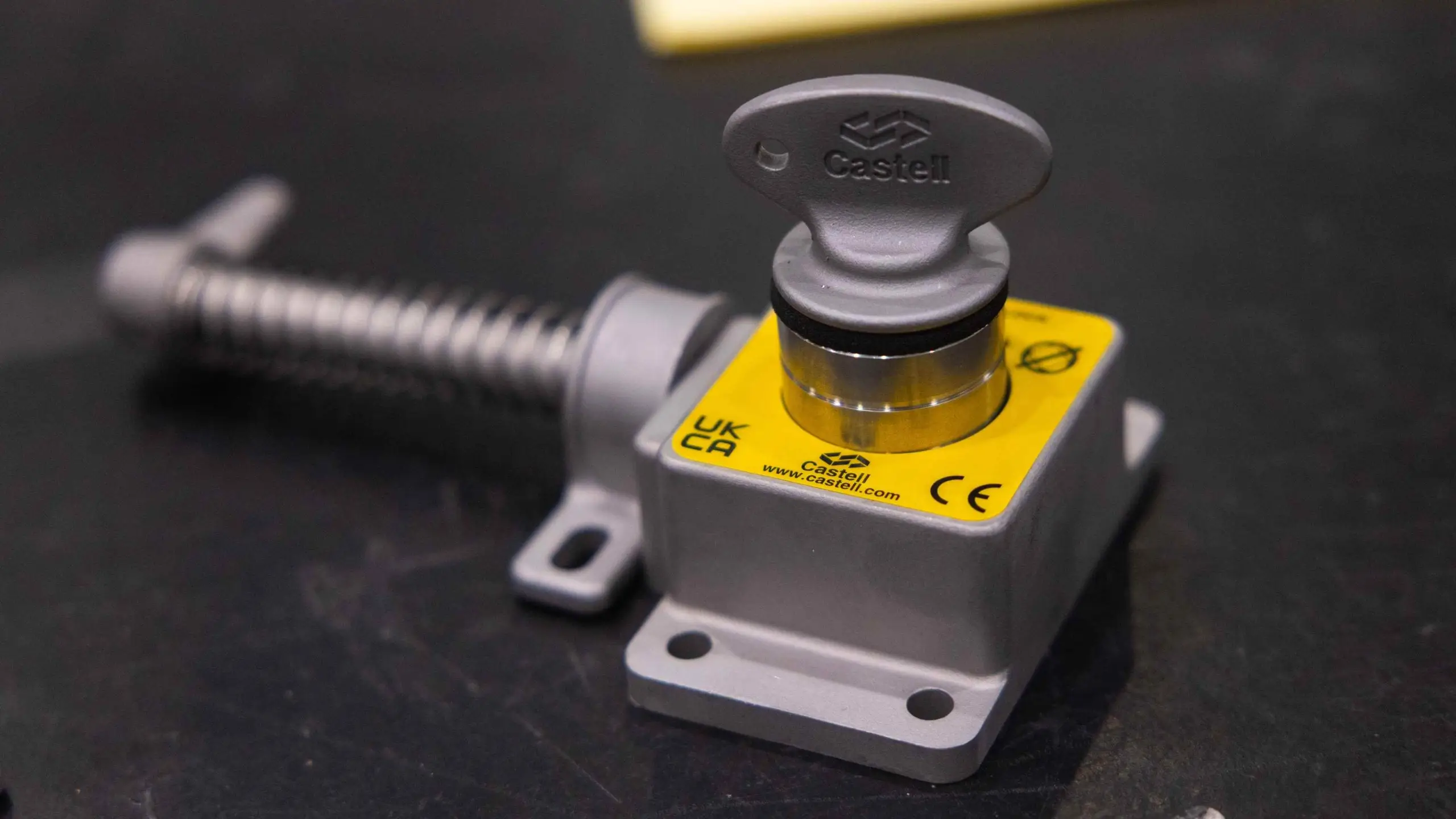
Single key vs dual key vs bolt interlock
Most trapped key systems use a combination of these three types. Here is how they differ:
| Type | What it controls | Typical use | Examples |
|---|---|---|---|
| Single key access interlock | A door, gate or guard | Part body access, where an operator reaches in but cannot be locked inside | Castell AI and AI-HD, Kirk Type DC |
| Dual key access interlock | A door, gate or guard, plus a personnel key | Full body access, where someone walks inside and must not be locked in | Castell AIE and AIES, Kirk Type D |
| Bolt interlock | A switch, breaker or lever, not a door | Locking the energy source off at the start of the sequence | Castell KL, Kirk Type F |
Single and dual key interlocks control entry; bolt interlocks control the energy source. In a typical system, the bolt or isolation interlock releases the key that the access interlock needs.
A quick example: securing access to a running machine
Picture a packaging machine behind a hinged guard door that operators open to clear jams:
- While the machine runs, its key sits in a key switch that forms part of the machine’s safety circuit. The guard door is locked by an access interlock with no key in it.
- To stop the machine, the operator turns and removes the key. This breaks the safety circuit and the machine shuts down.
- The operator takes the key to the access interlock on the guard door, inserts it and turns it. The bolt is released, the door opens and the key is now trapped.
- With the key trapped, there is no way to restart the machine. It stays off for as long as the door is open.
- When the work is done, the door is closed and the bolt re-engages. Only then is the key released, so it can be returned to the key switch and the machine restarted.
If the operator needed to walk inside the machine, the same sequence would use a dual key interlock. The operator would carry a personnel key in with them, so the door could not be locked behind them.
How to choose: Ask yourself three questions
Three questions narrow the choice quickly:
- Will anyone go inside the machine, full-bodied? If so, use a dual key interlock with a personnel key. If people only reach inside the machine, a single key interlock is usually enough.
- Is the door hinged or sliding? Some interlocks suit hinged doors only, some suit both, and others are made specifically for sliding doors.
- What environment will it work in? Washdown, corrosive or heavy-use areas call for stainless steel. Dry, indoor areas can use aluminium alloy or brass.
Our range of access interlocks from Castell, Kirk and STi covers every combination, with a selection guide and quick-reference table to help you narrow it down.
Frequently Asked Questions
Is an access interlock the same as a trapped key interlock?
Not quite. Trapped key interlocking is the overall system of coded keys and locks. An access interlock is one component of it: the lock on the door, gate or guard that controls entry to the hazardous area.
Can an access interlock replace lockout/tagout (LOTO)?
Access interlocks physically enforce the isolation sequence rather than relying on a procedure being followed. The two approaches are not mutually exclusive and are often used together. Whether interlocking can replace lockout/tagout on a particular machine depends on your risk assessment and local regulations.
When do I need a personnel key?
Whenever someone can walk inside the hazardous area, a personnel key is needed. The operator carries the personnel key in with them, so the door cannot be locked behind them and the system cannot be restarted until they come out and return the key.