
Safe Access Control for Machinery and Hazardous Areas
Access interlocks are used to reduce risk when workers enter hazardous areas. Their purpose is to greatly minimise the possibility of energy restoration occurring whilst personnel are in the restricted area. They achieve this by trapping the key that controls the electrical supply once the supply is off.
Access interlocks typically have two parts: a main body, mounted to the stationary portion of the equipment or door frame, and a bolt, mounted to the door or gate. The key is trapped in the main body of the interlock when the two parts are separated. Only once the bolt re-engages the main body will the key be released.
For over 100 years, access interlocks from Castell, Kirk and STi have been used to manage risk and protect personnel across a range of access control environments.
How do Access Interlocks work?
Access interlocks are fitted to the doors, gates or guards leading into hazardous areas, and will only open with a key that has been released by first isolating the energy source. While the door is open, that key stays trapped, preventing the machine or electrical supply from being switched back on.
That is what sets an access control interlock system apart from signage or procedure alone: machine access control is built into the hardware. The safe sequence ensures that workers need to follow process, regardless of training, time pressure or operator memory. A typical sequence has three steps:
- Isolate. The energy source is switched off and locked by an isolation interlock, which releases a key.
- Exchange. On larger systems, that key is turned in a key exchange unit to release one or more access keys.
- Access. The access key opens the access interlock and stays trapped until the door is closed and locked again.
For the principle behind the full sequence, see our guide to trapped key interlocking.
Part-body or full-body access needed? In cases where an operator only needs to reach into a machine, a single-key access interlock is usually sufficient. However, if an operator needs to walk inside a machine area, a dual-key interlock with a personnel key is recommended: the operator carries that key into the area, so the door cannot be locked behind them and the system cannot be restarted until they come out.
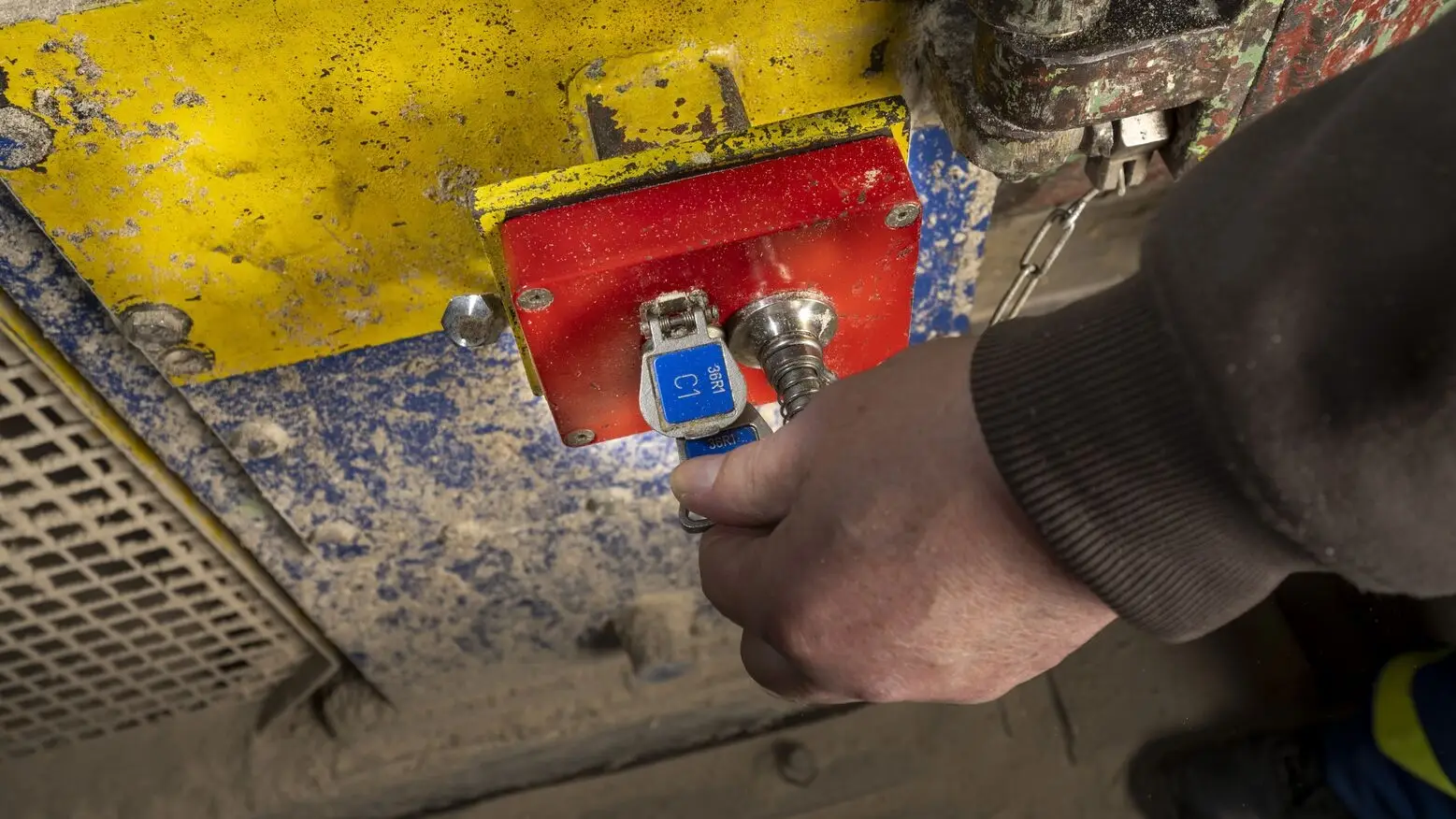
The Sentric Safety Group Access Interlock Range
The range below brings together Castell, Kirk and STi access interlocks for hinged doors, sliding doors, gates, guards and trap doors, in single key, dual key and switch-monitored versions. Filter by brand or type, or use the selection guide that follows to narrow down your desired product.